
Benchmarking Frankston-Mornington Peninsula Report
The Committee proudly launched its Benchmarking Report for 2026 in front of more than 70 members, Members of Parliament, Mayors, and business leaders in Mornington on Friday, 6 March.
You can read the report and its findings here.
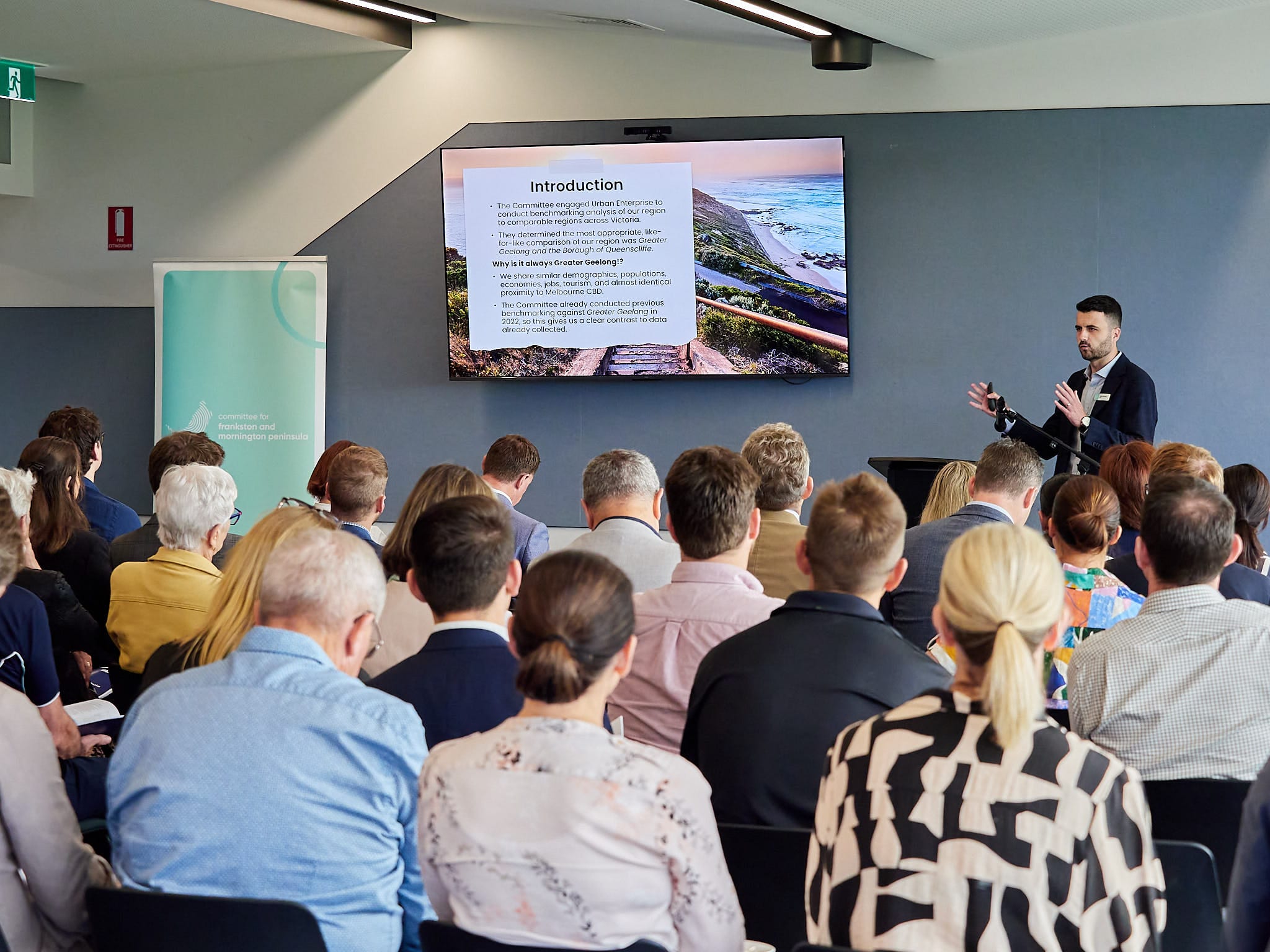
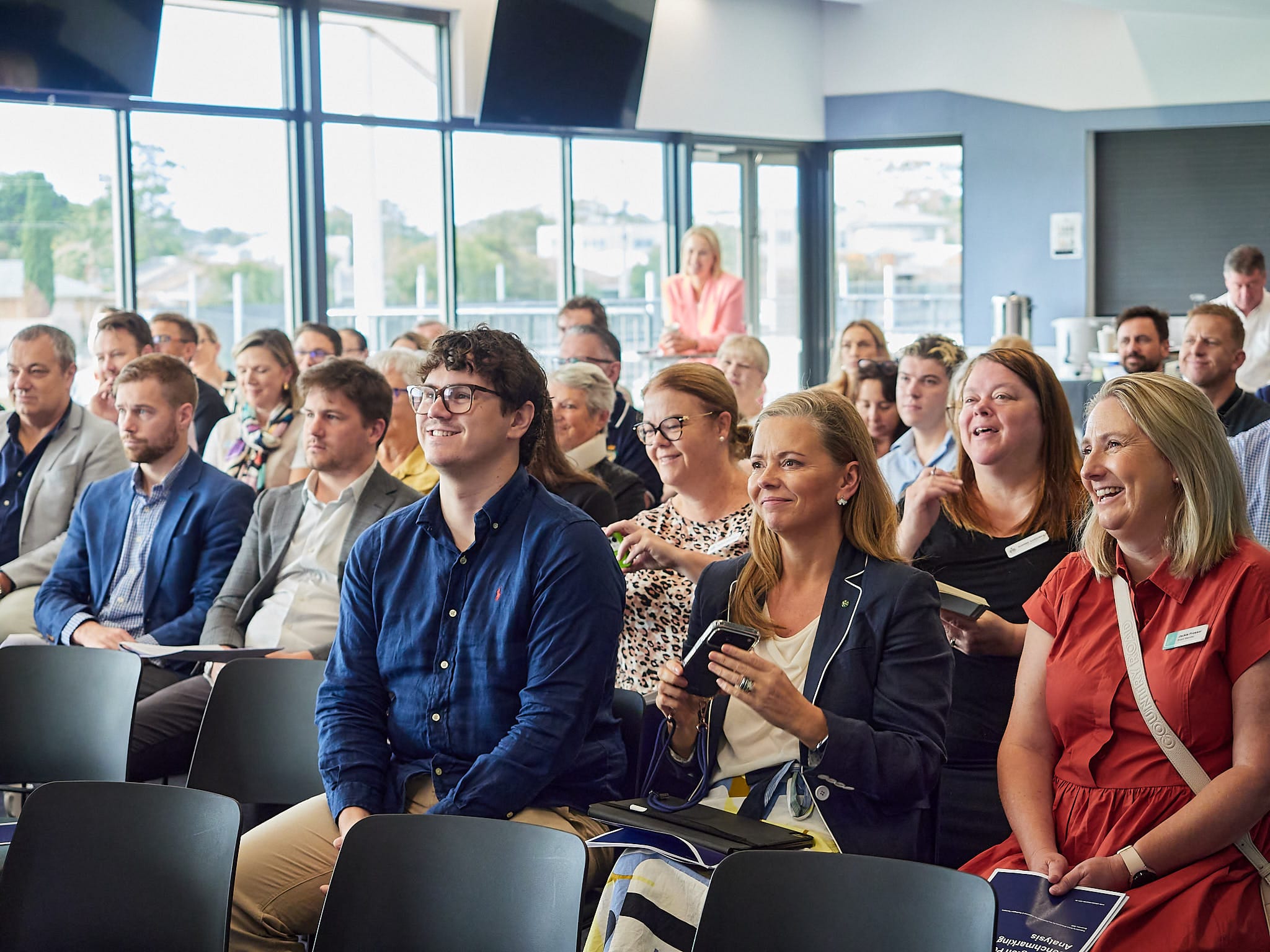
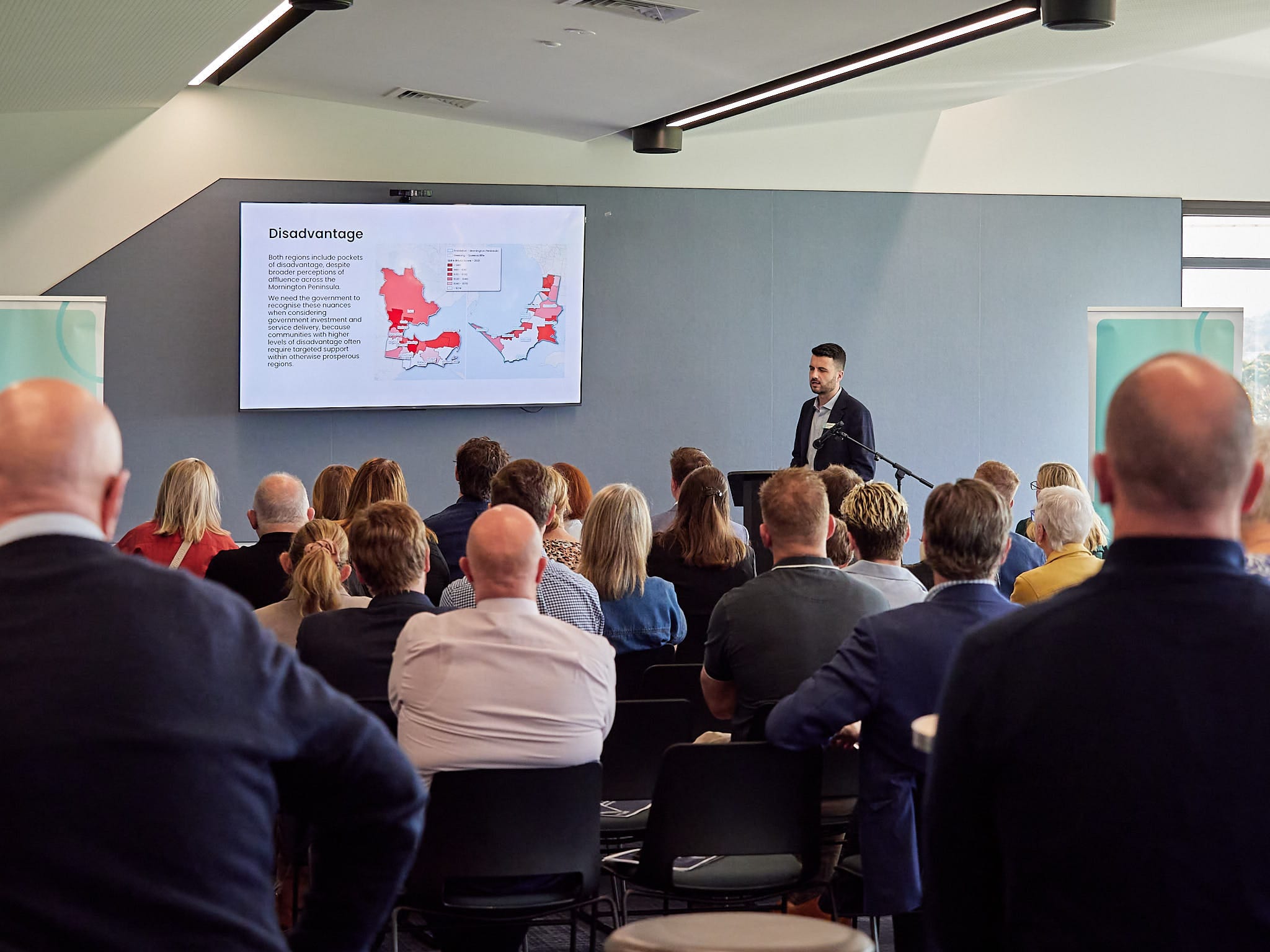
We were delighted to have Frankston City Mayor, Cr Sue Baker and Acting Mornington Peninsula Shire Mayor, Cr Paul
Pingiaro - launch
the report, and remind members of the critical partnership held between the Committee and local government.
Joining us as special guests included: Zoe McKenzie MP, Jodie Belyea MP, Chris Crewther MP, Cr Stephen Batty, and Liberal Candidate for Nepean Anthony Marsh.
CEO, Josh Sinclair, presented the reports findings, including:
- Frankston–Mornington Peninsula businesses pay $225 million more in Payroll Tax each year than businesses in Greater Geelong. That’s despite the two regions sharing similar populations, numbers of businesses and economic output.
- Across all major State Government taxes— including payroll tax, land tax, stamp duty and the short-stay levy — the Peninsula contributes substantially more in tax. This is largely due to the Peninsula’s metropolitan classification, property values and holiday homes.
- Over the past three Victorian State Budgets, Greater Geelong received $4.2 billion in capital investment, compared with $1.8 billion allocated to Frankston–Mornington Peninsula. This equates to a 2.3-to-1 investment ratio, or approximately $14,400 per resident in Greater Geelong compared to $5,600 per resident in Frankston–Mornington Peninsula.
The report also found that sustained funding disparities are contributing to long term structural challenges, including:
- Young people (18-35) are more likely to leave the Peninsula than Geelong due to housing affordability, fewer education opportunities, and lack of public transport.
- Nearly 1 in 2 Frankston-Mornington Peninsula residents commute out of area for work. In Greater Geelong, 76% of residents work where they live.
- Greater Geelong will build 48,000 new homes by 2036. The peninsula will build 19,000. Coupled with a lower occupancy rate, housing capacity and affordability is significantly more challenging in Frankston-Mornington Peninsula.
- Despite recording 2 million more visitors than Greater Geelong, Frankston-Mornington Peninsula received no regional development or major tourism funding.
The Committee has 8 priorities which it has shared with decision-makers and politicians, where we believe progress can be made to alleviate some of the structural challenges identified in this report and close the gap between a leading peer like Greater Geelong.
The Committee will utilise the data collected in this report to assist advocacy efforts with senior decision-makers and local representatives in the lead up to November’s Victorian Election.
We'd also like to thank the following organisations for their support in releasing this report:
- Urban Enterprise
- Fixon Media
- James Pyne Photography
- Frankston City Council
- Mornington Peninsula Shire Council
- Alexandra Park Pavilion, Mornington