
2026 Benchmarking Frankston Mornington Peninsula Report
The Committee for Frankston & Mornington Peninsula engaged Urban Enterprise to conduct benchmarking analysis of our region to comparable regions across Victoria. It was determined the most appropriate, like-for-like comparison of our region was Greater Geelong and the Borough of Queenscliffe.
This is due to similar demographics, economies, and proximity to Melbourne CBD. The Committee previously conducted benchmarking against Greater Geelong in 2022.
This report benchmarks our performance against a leading peer, and identifies areas for improvement. It also assists the Committee in holding decision-makers accountable, implement best advocacy practices, and formulating policies and objectives for the region.
The findings in this report support the Committee’s advocacy for fair recognition and funding for our region.
The information contained in this report is accurate as at December 2025.
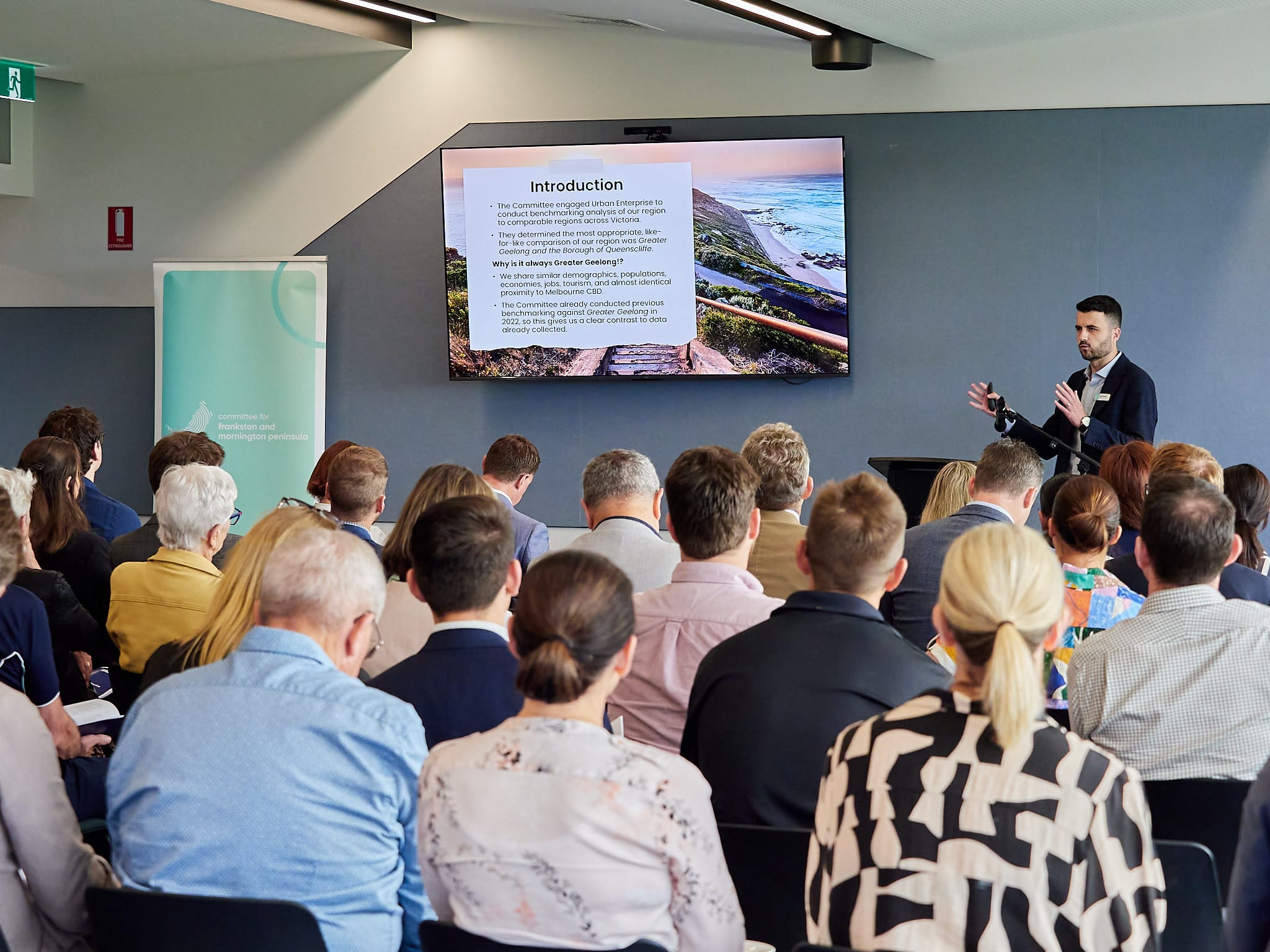
The Committee launched its Benchmarking Report ahead of Victorian State Election in March 2026.
Media Release - 'Peninsula Pays More, Gets Less: New Report Reveals Funding Shortfall'
A new report commissioned by the Committee for Frankston & Mornington Peninsula has revealed that the Peninsula pays hundreds of millions of dollars more in tax than Greater Geelong – but gets less than half the funding.
Media Release
Download the Summary Report.
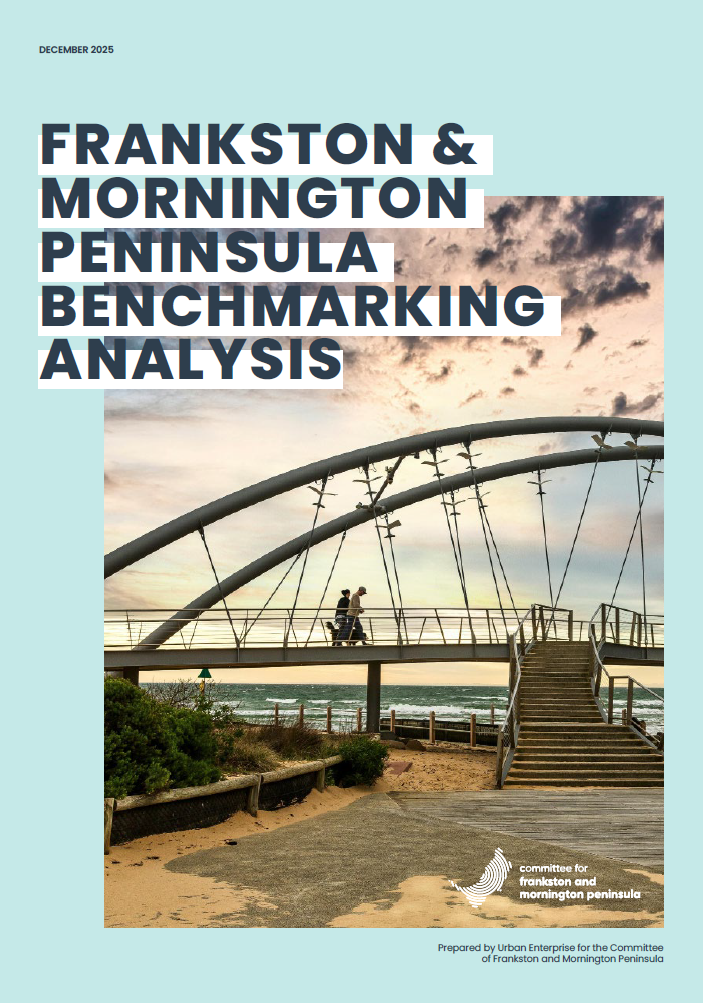
Benchmarking Analysis - Key Findings
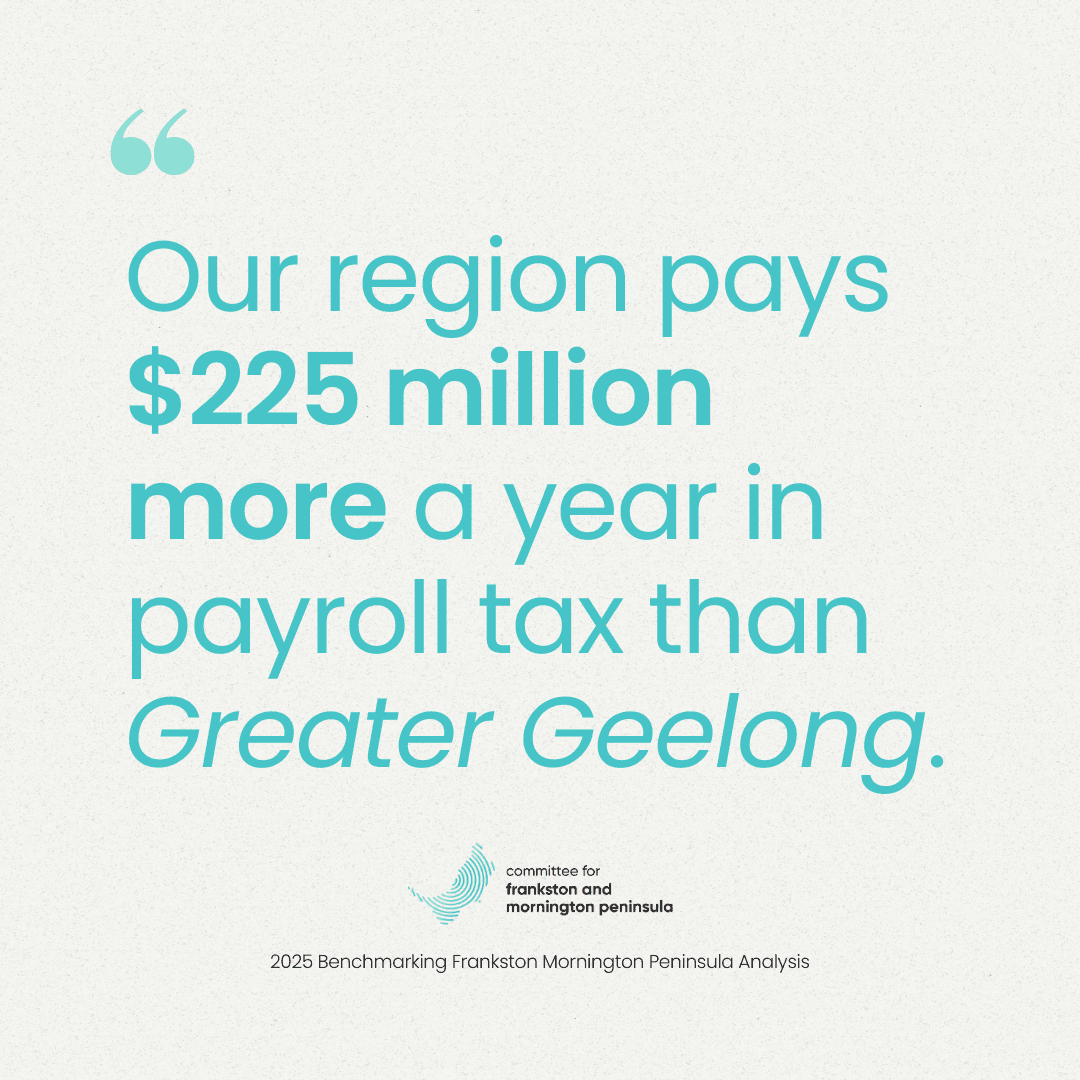
Payroll Tax
Indicative modelling highlights the scale of the overall tax differential between the two regions, with payroll tax payments in Frankston and Mornington Peninsula estimated to be $290 million per annum, compared with around $65 million for Greater Geelong–Queenscliffe.
This represents a notable disparity in fiscal contribution, despite the region's recording similar figures in number of businesses and wage estimates.
The primary reason for this significant disparity is that Frankston and Mornington Peninsula businesses are subject to a metropolitan payroll tax rate (4.85%), while Greater Geelong businesses are subject to a more favourable regional payroll tax rate (1.21%).
Government Funding
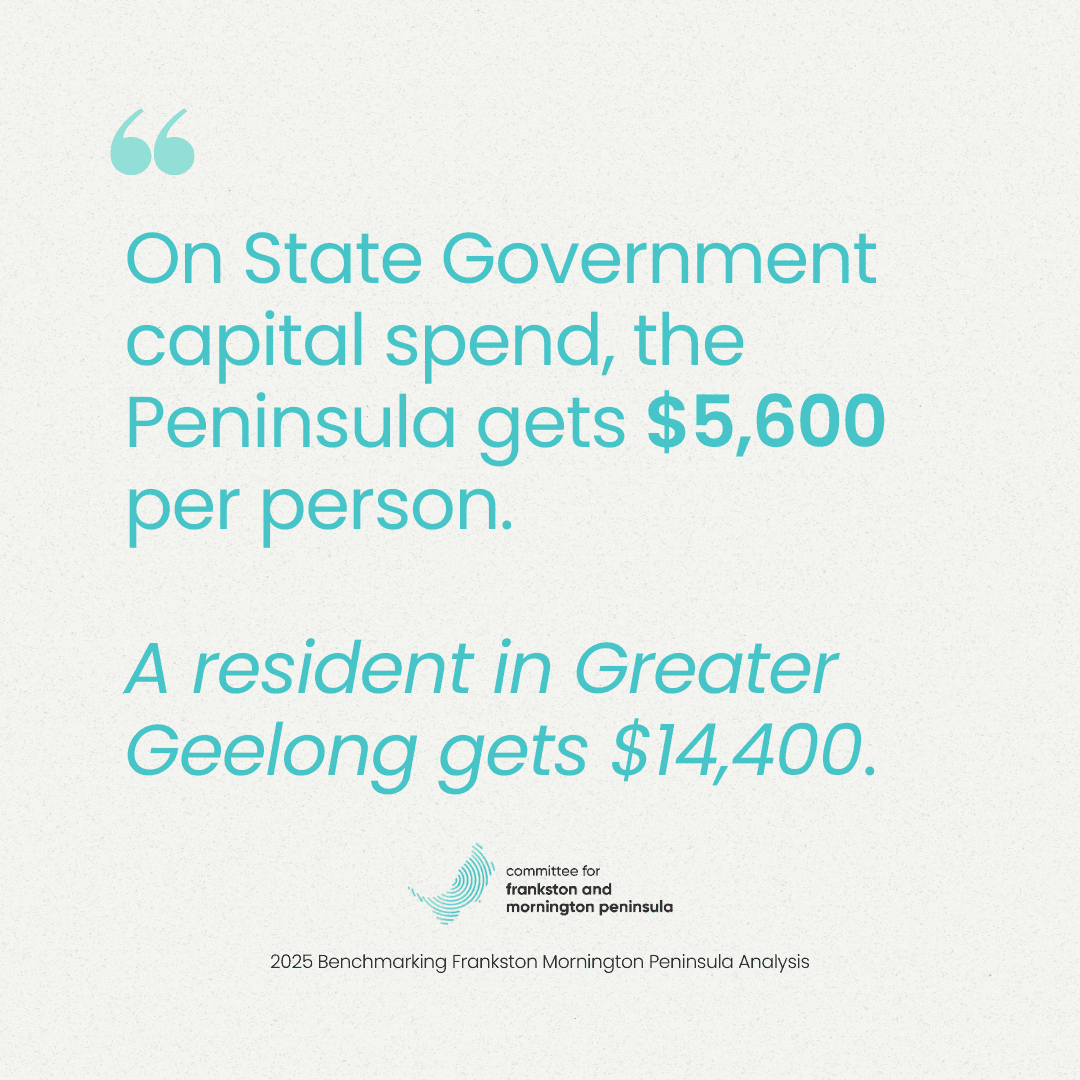
On a per capita basis, this figure represents approximately $5,600 in state government funding for Frankston-Mornington Peninsula compared to $14,400 for Geelong-Queenscliffe.
These figures highlights a sustained difference in the capital commitments from the state budget to Geelong-Queenscliffe compared with Frankston- Mornington Peninsula over successive budget cycles.
State Taxes
Across all major state taxes and levies, the analysis indicates that Frankston–Mornington Peninsula is likely to face a materially higher overall tax burden than Greater Geelong–Queenscliffe.
This reflects a combination of our region's metropolitan status and underlying economic and property market characteristics.
In particular, Frankston–Mornington Peninsula is subject to additional metropolitan specific charges and a higher payroll tax rate, while also exhibiting higher residential property values and a larger commercial and industrial land base, which together increase exposure to land tax and stamp duty.
The region’s substantial short-stay accommodation market further contributes to a higher tax take through the short-stay accommodation levy.
Total Estimated Investment (TEI)
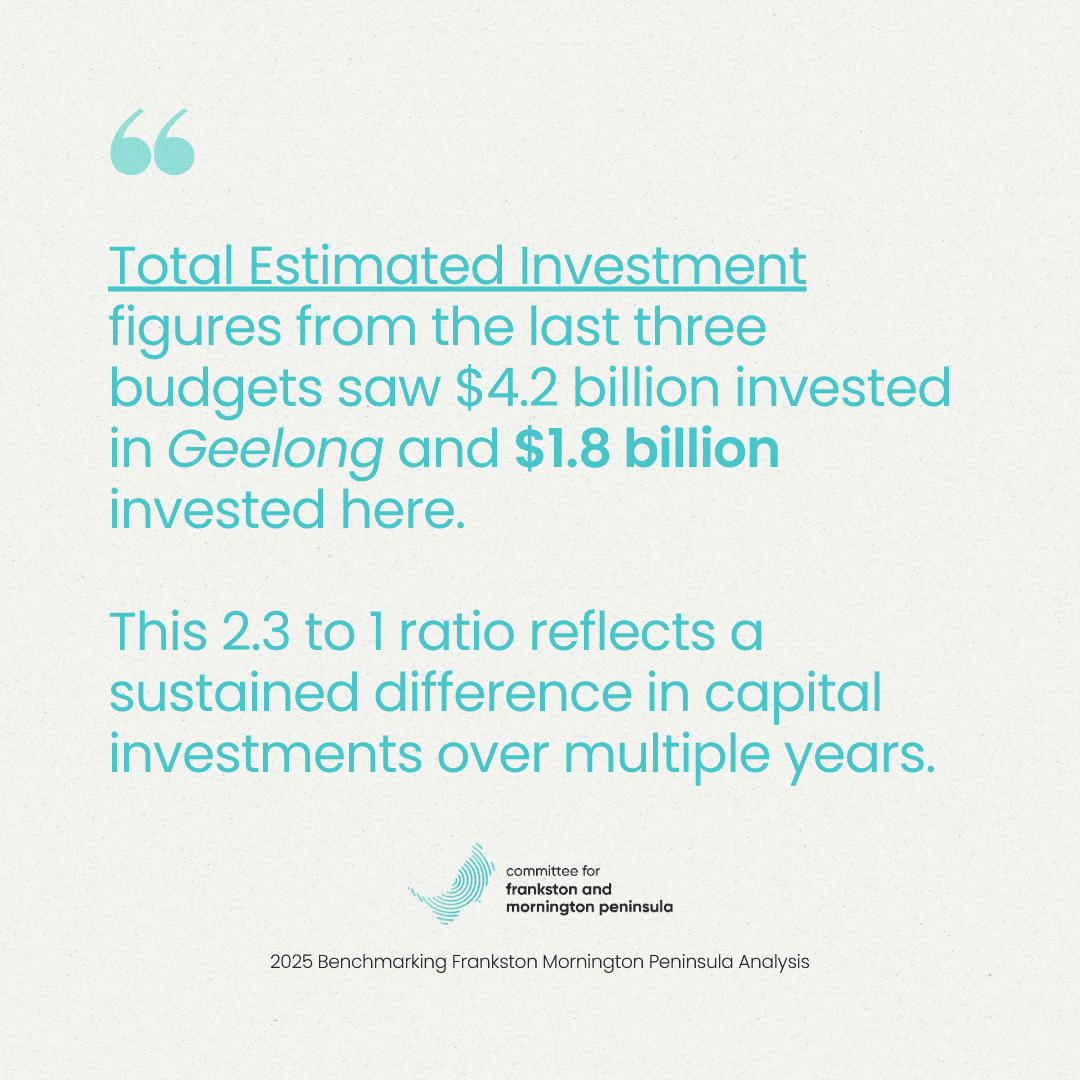
The Total Estimated Investment (TEI) reflects projects committed across the past three State Budgets, capturing multi-year funding. On this measure, the difference in funding between the two regions is significant.
Across the three most recent budgets, Geelong-Queenscliffe received $4.2 billion, compared with $1.8 billion in Frankston and the Mornington Peninsula.
This represents a ratio of around 2.3 to 1, which is consistent with the findings of the previous benchmarking report, prepared in 2022 (2.4 to 1).
Quality of Investment
From a comparative perspective, the absence of tourism and regional development funding in the Frankston-Mornington Peninsula region is a clear difference, particularly given the region’s destination role, and status as one of Victoria’s most visited tourism regions.
This is further highlighted by significant demand for local transport infrastructure and services, which suggests a stronger case for state government investment in these areas.
By contrast, Geelong has successfully leveraged its position as a regional city to attract both resident and visitor-led investment projects.
Overall, while both regions have benefited from major health and transport investments, Geelong-Queenscliffe has attracted a more diversified capital program that extends beyond resident services to include projects that support and enhance the region’s economic and tourism role.
Ageing Peninsula
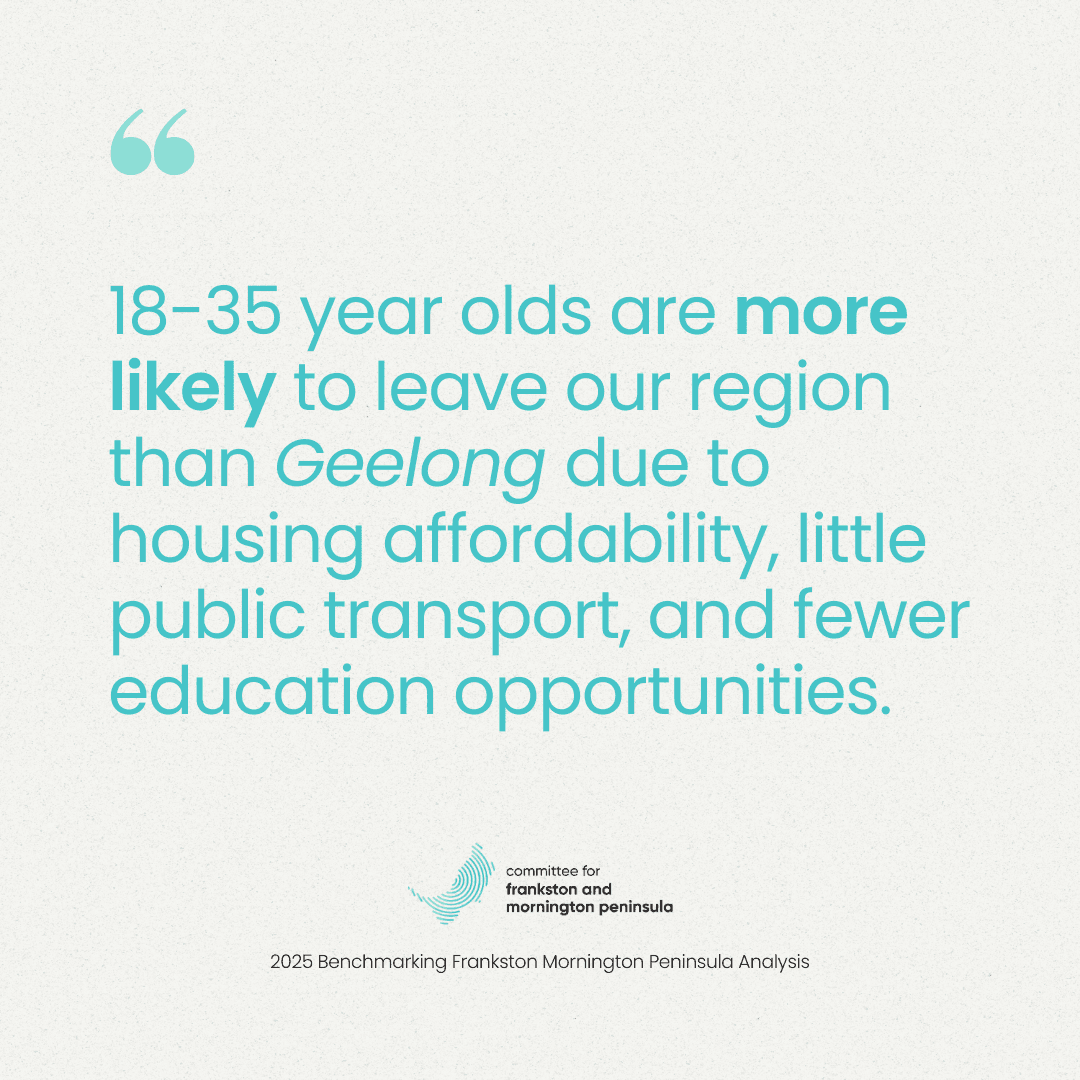
Geelong-Queenscliffe has a relatively younger profile, with a higher representation of younger workers (20-34 years), reflecting its function as a growing regional city with significant growth area housing development, and increasing employment opportunities.
Geelong has a higher proportion of university-educated residents, reflecting its growing professional workforce, proximity to tertiary institutions and knowledge-intensive industries.
The lower levels of younger residents (18-35 years) is likely to be influenced by a lack of housing and rental affordability, access to education opportunities out of area and in Melbourne, and the lack of public transport servicing the Peninsula.
Job Containment
Employment patterns highlight clear distinctions in the structure and self-sufficiency of the two regional economies.
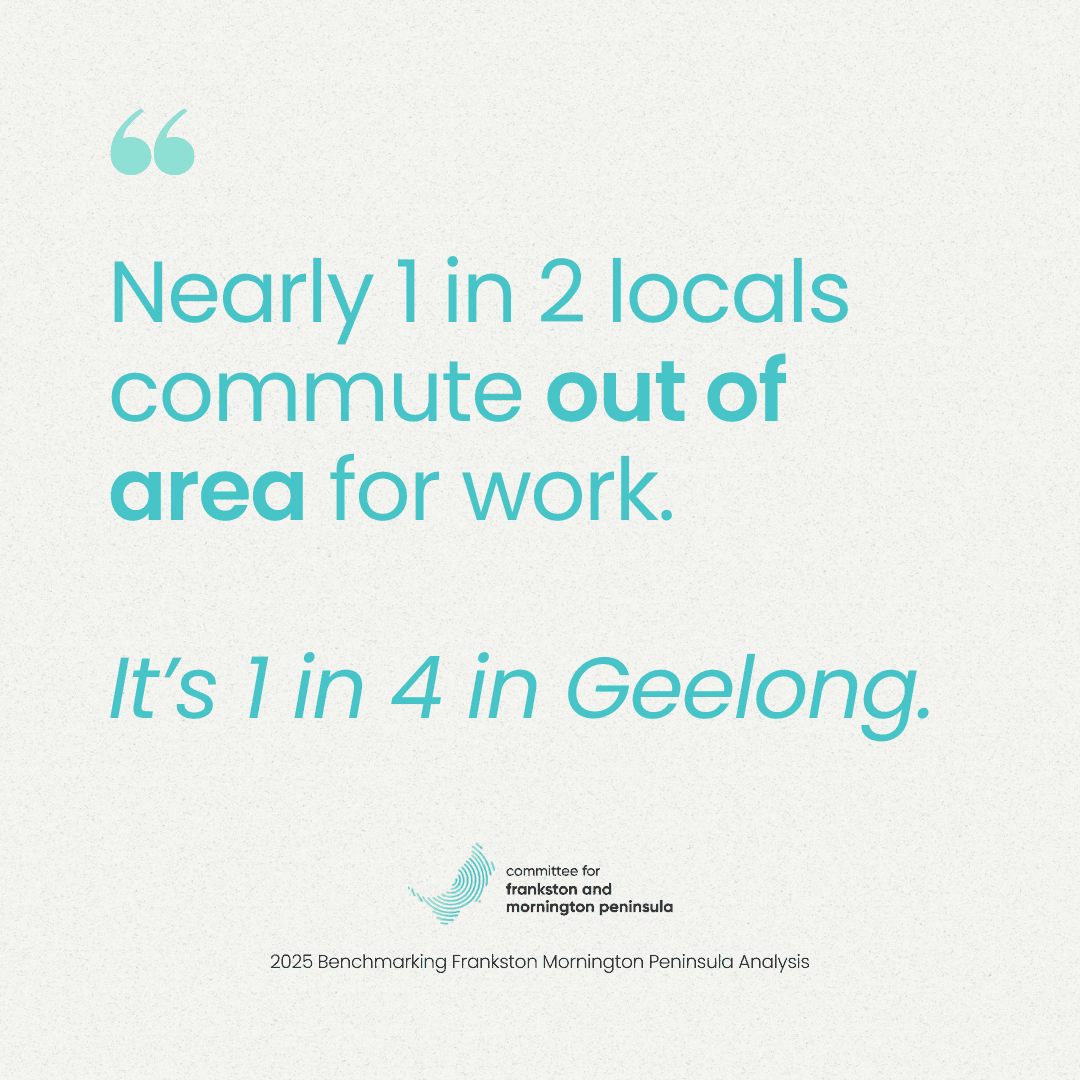
In Geelong–Queenscliffe, approximately 76% of employed residents work locally, indicating a high level of job containment.
By contrast, only 55% of Frankston–Mornington Peninsula residents work locally.
The lower containment rate reflects a higher level of out-commuting to other areas in metropolitan Melbourne.
This outward commuting pattern suggests that there may be fewer employment opportunities locally, that are aligned with the skills and expertise of employed residents. It also highlights a level of centralisation, whereby residents live in the region, but work in more inner urban areas and employment precincts.
Housing Affordability
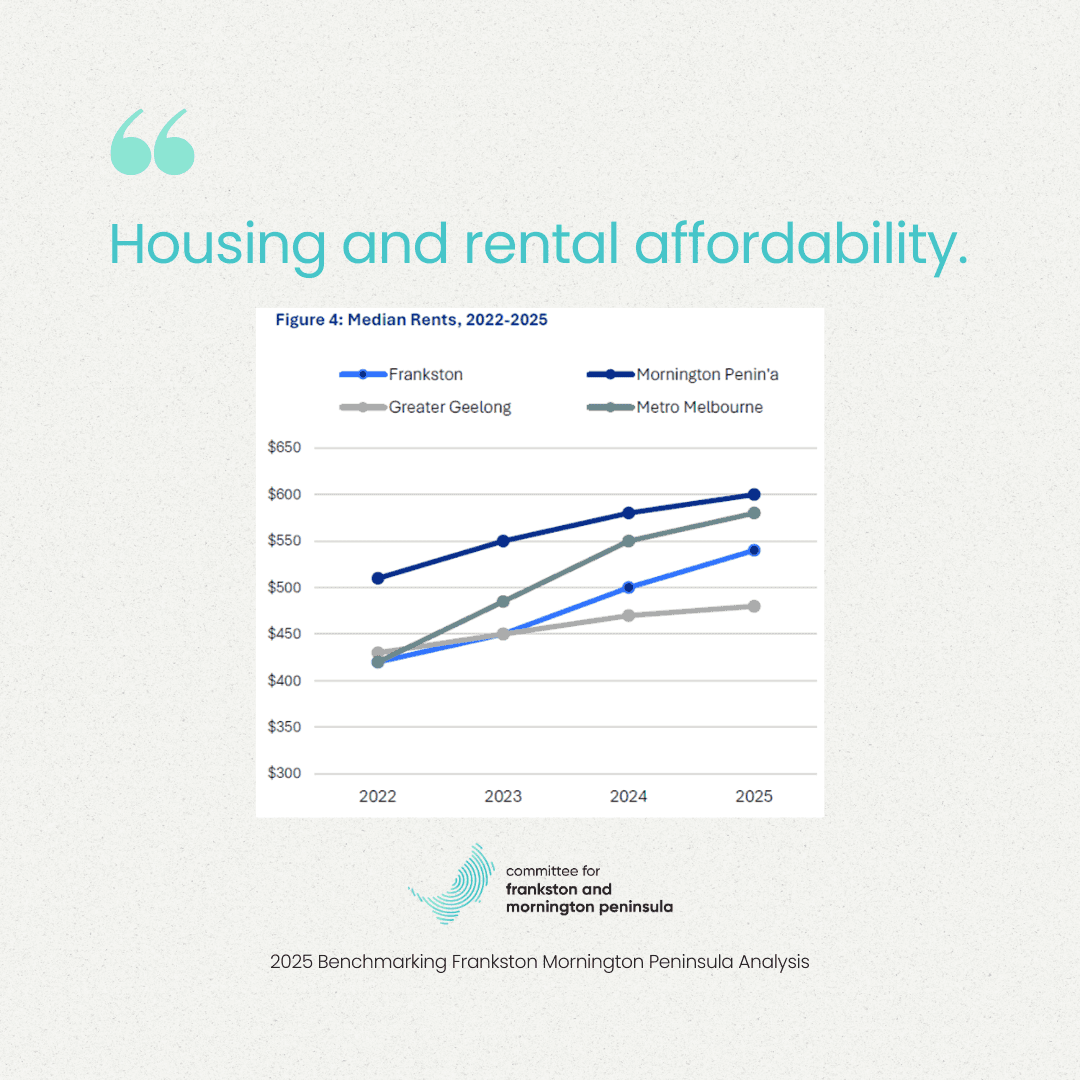
Rental availability and housing affordability continue to be key challenges in the Frankston-Mornington Peninsula region.
Median rents have risen consistently risen since 2022, reflecting ongoing demand pressures on the rental market.
Demand remains strong, supported by limited new rental supply and continued population growth, particularly from households seeking affordable coastal or peri-urban locations within commuting distance of Melbourne.
While house prices have softened since the post pandemic peak of 2022, affordability remains a key concern, particularly for first home buyers and low to moderate income earners.
High house prices risks pricing out key worker demographics, such as those employed in health, education, hospitality, construction and tourism, which are critical to the long-term economic resilience and capacity of the region.
Priority Projects - Response to Benchmarking
These key advocacy initiatives are current funding priorities for the Frankston–Mornington Peninsula region, and were identified by the Committee for Frankston & Mornington Peninsula, its membership, partners, and key stakeholders.
These projects highlight the scale and diversity of investment projects that are required to meet the needs of a growing and evolving region.
They respond to a combination of infrastructure and service gaps, economic development opportunities, enhanced liveability outcomes,
and economic resilience.
Re-zoning of surplus SUZ-1 land
Overview
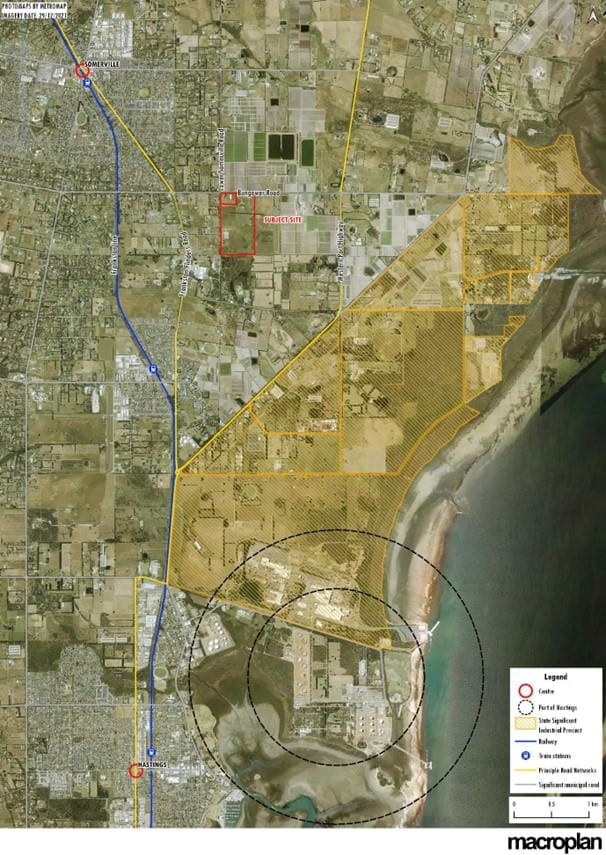
This priority project proposes the rezoning of underutilised Special Use Zone – Port Related Uses (SUZ1) land in Hastings to unlock new
employment, industrial and investment opportunities.
Much of this land remains undeveloped and cannot accommodate general industrial uses under existing planning controls.
Rezoning strategically selected areas would address the current shortage of industrial land on the Mornington Peninsula, support
local jobs growth and diversify the economy, while still protecting land critical to future port operations.
Strategic Justification
The release of surplus SUZ-1 land creates an opportunity to co-locate industrial
development with the port.
Rezoning suitable areas would help address the Mornington Peninsula’s industrial land shortage, support job creation and strengthen its role in Victoria’s freight network.
This transition also aligns with State planning objectives to optimise strategic land and attract employment-generating investment.
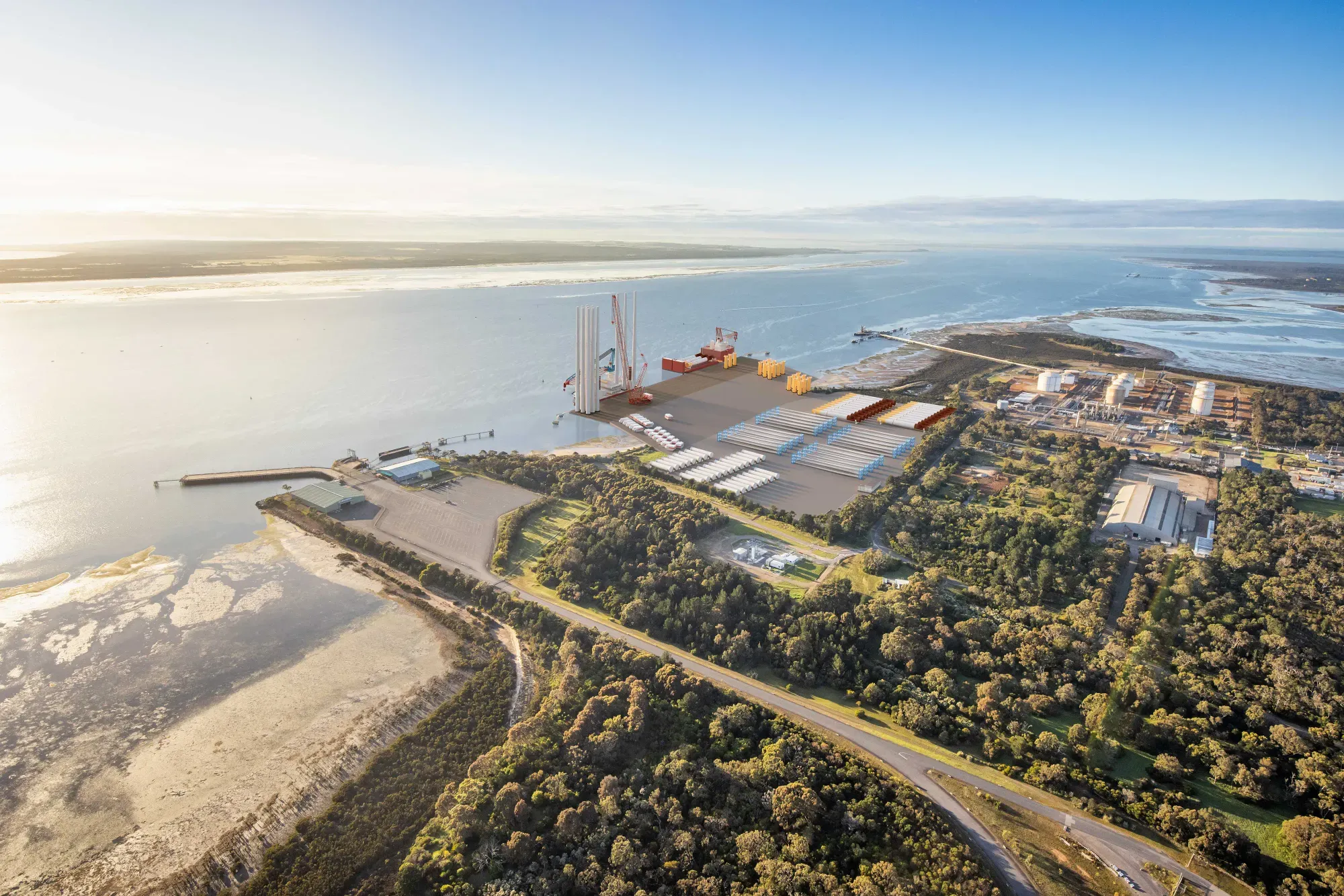
Victorian Renewable Energy Terminal
OverviewThe Victorian Renewable Energy Terminal, proposed at the Port of Hastings, will be Australia’s first dedicated port for offshore wind assembly.
The terminal is a key enabling project for Victoria’s Gippsland Offshore Wind Zone. The project leverages Hastings’ deep-water port, existing port-related land, and extensive laydown areas.
The terminal will play a critical role in supporting supply chain development, creating new jobs in advanced manufacturing and logistics, and positioning Hastings as a strategic hub in Victoria’s clean energy transition.
Strategic Justification
The VRET is central to delivering Victoria’s offshore wind targets of 2 GW by 2032, 4 GW by 2035, and 9 GW by 2040, and addresses the state’s need for dedicated port infrastructure to support large-scale renewable energy deployment.
Establishing the terminal at Hastings positions the region as a focal point for offshore wind investment, advanced manufacturing and clean-energy supply chain activity.
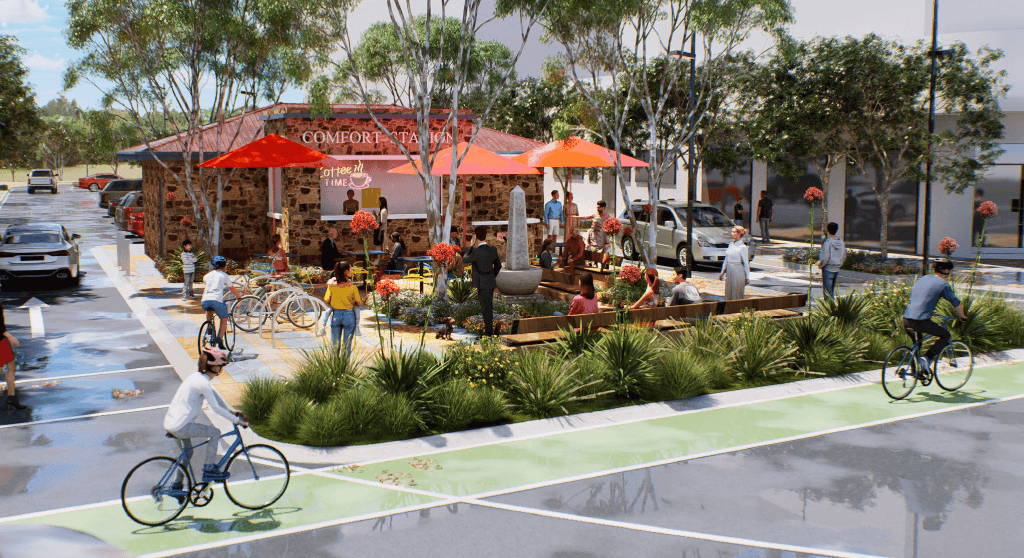
Nepean Boulevard Revitalisation
Overview
The Nepean Boulevard Revitalisation Project will enhance safety, connectivity and public amenity in
Frankston's CBD.
It includes a welcoming gateway at Kananook Creek with safe walking and cycling links; Upgrade Overton Road–Nepean Highway; Repurposing the historic Comfort Station as a revitalised community space; supporting outdoor dining and retail through median landscaping; connect the Bay Trail to Frankston Waterfront; and building a new shared path along Nepean Highway.
Strategic Justification
The Nepean Highway currently functions as a traffic corridor rather than a gateway, creating a
barrier between Frankston’s city centre, creek and foreshore.
The area has limited pedestrian and cycling amenity, poor safety, and underutilised public spaces, reducing its appeal as a destination and constraining economic activity.
With Frankston designated as a Metropolitan Activity Centre, improved connectivity, safety and public realm are essential to support population growth, attract investment and enhance the city’s role as a coastal hub.
The revitalisation will deliver new opportunities for retail and dining; repositioning the precinct as a vibrant and welcoming destination.
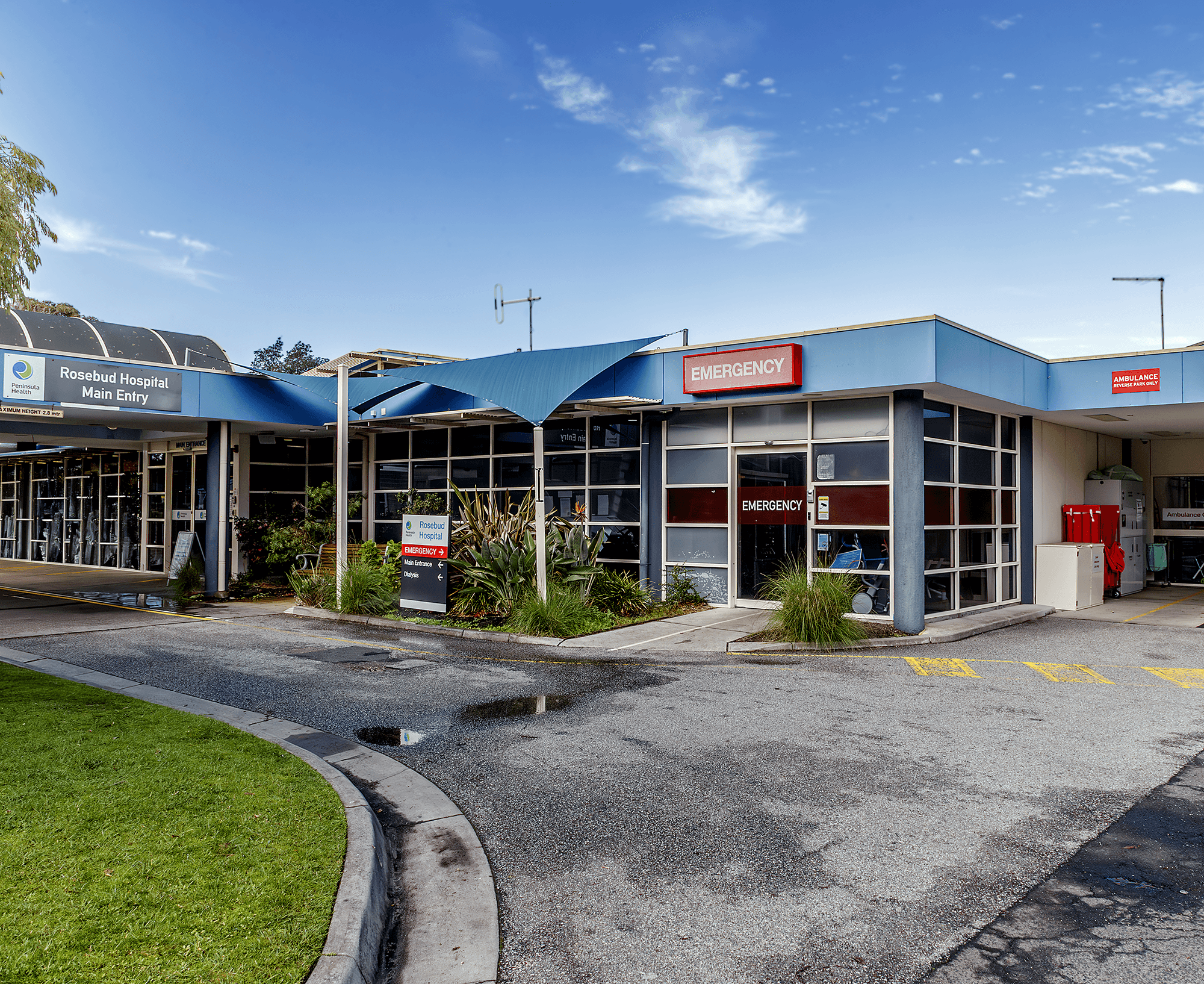
Redevelopment of Rosebud Hospital
Overview
The Rosebud Hospital Redevelopment will provide a new and expanded emergency department and imaging
department, significantly improving access to urgent and diagnostic care.
It will also include capacity for two additional operating theatres, specialist outpatient spaces, new inpatient wards, and contemporary day medical services.
The redevelopment will incorporate teaching and training areas to support workforce development and ensure the hospital continues to attract and retain skilled clinicians.
Strategic Justification
Rosebud Hospital is a vital healthcare provider for the Mornington Peninsula’s
residents and 7.5 million annual visitors, but its 1960s-built facilities are outdated and no longer meet modern healthcare
standards.
With a growing and ageing population and significant seasonal demand, the hospital lacks the capacity to deliver essential services, forcing many patients to travel to Frankston or inner-Melbourne hospitals.
Redevelopment will address these shortcomings by providing modern infrastructure, greater capacity, and specialist services to ensure
the community can access high-quality care locally, reducing pressure on surrounding hospitals and meeting future demand.
Stony Point Rail Line Uplift
Overview
The Stony Point Line is Melbourne’s only diesel-operated metropolitan rail service.
The Stony Point Rail Line Uplift, assessed in the Baxter Electrification Preliminary Business Case, proposes a cost-effective package of upgrades to improve service frequency, reliability and accessibility without full electrification; though electrification to Frankston East would enhance connectivity to Peninsula University Hospital and Monash University.
This project includes installation of passing loops to enable more frequent services and safety upgrades to level crossings.
Strategic Justification
The Stony Point Rail Line is the only non-electrified service in metropolitan Melbourne
and is characterised by infrequent services, outdated infrastructure and poor reliability.
This limits public transport use across the Mornington Peninsula. Poor public transport restricts access to jobs, education and services.
The Stony Point Rail Line Uplift and electrification to Frankston East directly responds to these issues by connecting Frankston's health and education precinct to the CBD and improving service frequency and reliability.

Designated Area Migration Agreement (DAMA)
Overview
The Mornington Peninsula region is experiencing critical workforce shortages across key industries,
particularly in health care, hospitality, tourism, and agriculture.
These shortages are placing pressure on local businesses, constraining service delivery, and limiting the capacity of the region to support population growth and visitor demand.
A Designated Area Migration Agreement (DAMA) would provide a tailored migration pathway to address these challenges.
Establishing a DAMA for the Mornington Peninsula would align with the region’s economic development objectives by supporting workforce stability, strengthening local businesses, and ensuring essential services and industries can continue to grow.
Strategic Justification
Workforce shortages are a major constraint on the Mornington Peninsula’s economy,
particularly in sectors critical to local services and tourism.
Seasonal demand peaks intensify these pressures, leaving businesses and community services unable to fully meet needs.A DAMA would provide a structured mechanism to address these shortages, ensuring industries can access the skills they need where local labour is unavailable.
This would improve business continuity, support essential service delivery, and enhance the region’s economic resilience.
Visitor Economy Infrastructure & Amenity
Overview
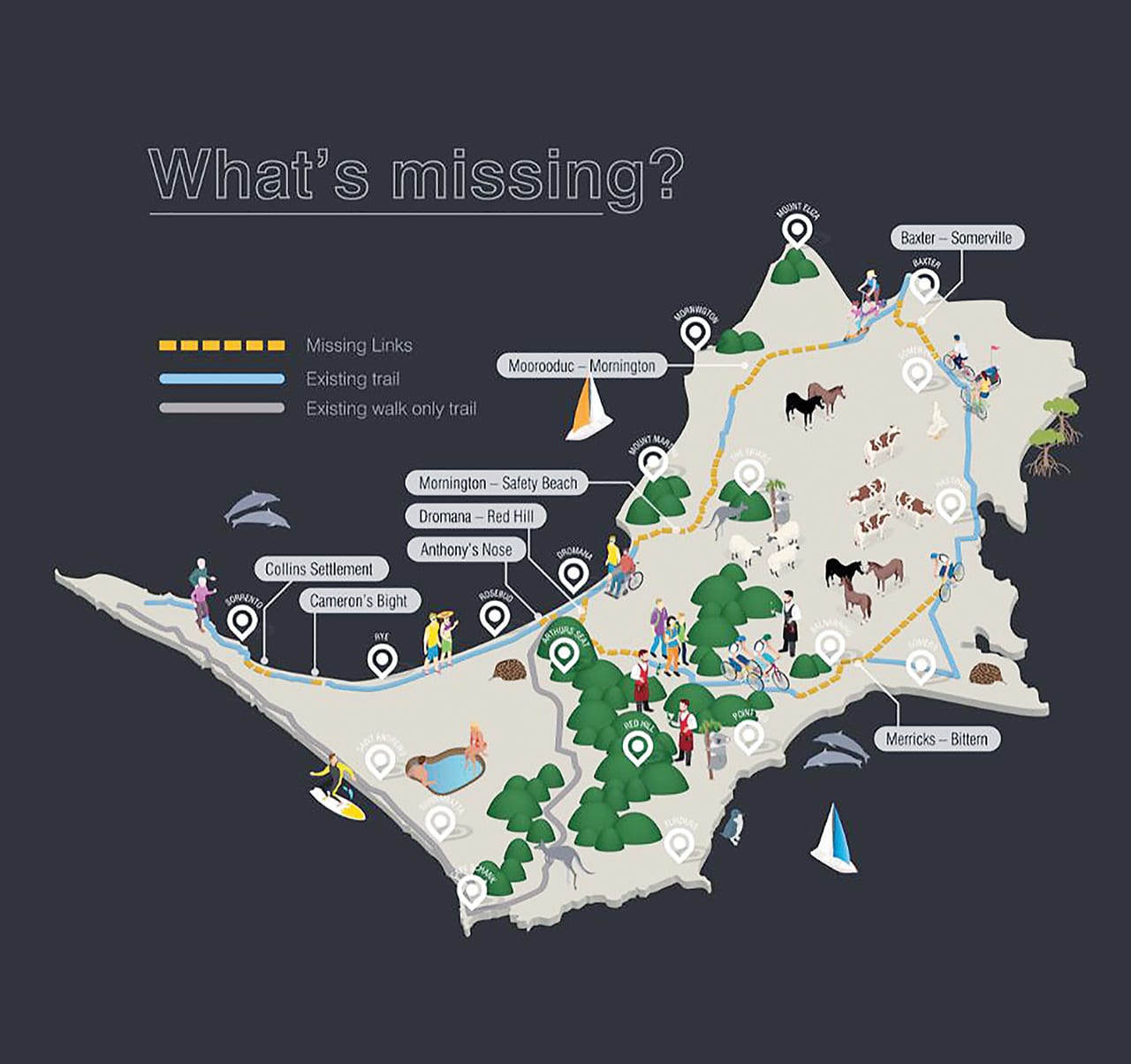
Peninsula Trail is a priority initiative of Mornington Peninsula Shire Council. The delivery of Peninsula Trail will see the
completion of Melbourne’s Bay Trail, connecting the mouth of the Yarra River in Port Melbourne to the entrance of Port Phillip Bay.
According to local government, an investment of $62.5m would see a return of $111m in economic benefit. This priroity also
includes upgrades to infrastructure services in key townships including water, sewerage, electricity infrastructure and mobile
connectivity.
Strategic Justification
The delivery of Peninsula Trail will complete Melbourne’s Bay Trail, establishing a continuous 170-kilometre active transport and
recreation network that links metropolitan Melbourne to the Peninsula and integrates with existing local trails. This project will
significantly enhance visitor experiences, increase accessibility, and strengthen the region’s position as a leading coastal tourism
destination. Investment in essential service upgrades in townships is required to support local businesses, improve visitor amenity,
and address longstanding infrastructure gaps.
Transport Projects
Overview
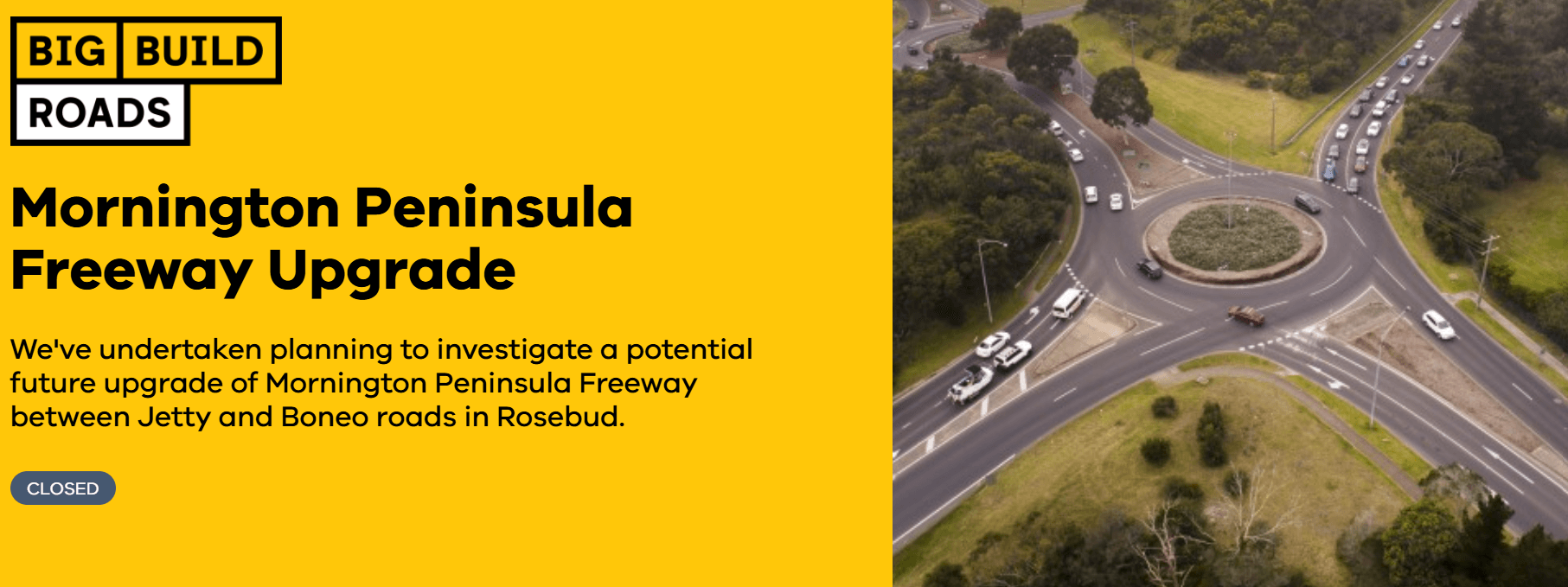
A number of priority road projects, including: a full freeway overpass at Jetty Road to improve
traffic flow and safety; Southern Peninsula Traffic Management, including a planning and feasibility study to assess current and future
transport needs on the southern Mornington Peninsula; East-West Connection Upgrades to the Mornington-Tyabb Road corridor and planning for
an ultimate east–west arterial link to Peninsula Link and Western Port.
Strategic Justification
The Mornington Peninsula faces growing pressures from population growth, visitor demand
and freight activity, creating congestion and safety challenges on key corridors and intersections.
Limited road connectivity and seasonal traffic surges undermine accessibility for residents, businesses and visitors, while safety risks at blackspot locations further reduce network performance.
The proposed projects address these issues by improving safety and efficiency on the arterial road network, delivering new connections such as the Jetty Road overpass, and planning for long-term transport needs on the southern Peninsula.
Together, these works will enhance accessibility, support economic activity and tourism, and provide a more sustainable transport network to accommodate future growth.